
“Do you Hear the People Sing?”[1]. Cultural (Re)Interpretations and Reshaping Memory
In the world inter-wired through social media and AI, cultural reinterpretations and appropriations receive ever increasingly new meanings. Frequently cultural (re)interpretations and reshaping of historical memories form a dangerous mode for societal discourses. In this article Milja Radovic focusses on the Balkan Peninsula and considers it as one of the most important places in Europe where a dynamic processes through which communities reshape history, memory and culture takes place.
Interpretations%20and%20Reshaping%20Memory)
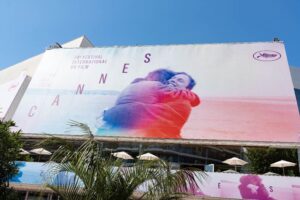
Between Apocalypse and New Life. The 78th Festival de Cannes: 13th – 24th May 2025
In this contribution, Milja Radovic reflects on the festival’s highlights, the role of the Ecumenical Jury and her own experience as a jury member. The articles explore some of the most interesting movies from the festival, offering thoughtful reviews and insights from the author’s perspective.

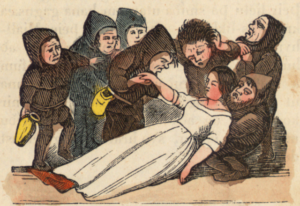
The Troubles with Snow White. Cinematic Cultural Shifts and Re-imagining the Fairytale
The importance and meanings of fairytales have been studied across a range of scholarly disciplines. According to the traditional understanding, the universal aspect of fairytales is in examining and presenting the human condition and life-lessons about the battle between good and evil and the importance of virtues in life. The question is: should contemporary, re-imagined fairytales reflect the spirit of their time, ideologies or politics? An essay by Milja Radovic

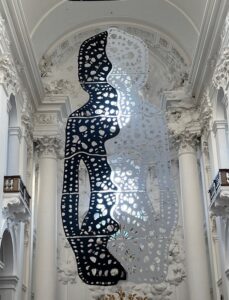
Soziale Vernetzungen im künstlerischen Kontext. Zur aktuellen Installation von Eva Petrič in der Kollegienkirche Salzburg (5. März bis 28. April 2025)
Die international tätige Multimedia- und Performancekünstlerin Eva Petrič hat in der Kollegienkirche in Salzburg die 9,5 m große Figur des Erdlings als Mahnmal konzipiert. Ein Mahnmal, das die Auswirkungen humanoiden Verhaltens auf unsere unmittelbare und mittelbare Umwelt ins Gedächtnis rufen soll. Ein Beitrag von Petra Pirklhuber.
)

The Year of Living Dangerously – In the land of raspberries and students –
Amid deepening political crises and societal fragmentation, the student uprisings in Serbia signal a resurgence of community and political engagement, challenging both local and global forces. In this contribution, Milja Radovic explores the theological dimensions of this movement, emphasizing that „being is communion“ and that transformation occurs through faith in action and ascetic praxis. Christian thought, she argues, can offer an antidote to apathy and isolation, fostering a communal life.

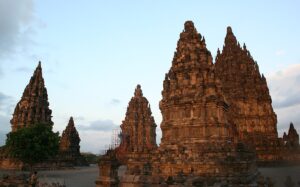
The Religious Topography of Yogyakarta (2/2)
Im zweiten Teil seines Beitrags beschäftigt sich Rüdiger Lohlker mit der religiösen Topographie Yogyakartas und der hierarchischen Struktur ihrer Moscheen. Die Gedhe Kauman Moschee dient als Referenzpunkt, während andere Moscheen wie die Plosokuning Moschee eine niedrigere Stellung einnehmen. Neben den Sultanatsmoscheen existieren moderne und gemeinschaftszentrierte Moscheen wie die Masjid Syuhada, ein Symbol des indonesischen Nationalismus. Auch Kirchen und chinesische Tempel integrieren Javanische Architekturelemente und verdeutlichen den interkulturellen Charakter der Stadt. Insgesamt zeigt sich eine hybride religiöse Landschaft, in der sich lokale und transnationale Traditionen überlagern.
)
The Religious Topography of Yogyakarta (1/2)
Im ersten Teil seines Beitrags beschäftigt sich Rüdiger Lohlker mit der Verbindung von religiösen Praktiken und räumlichen Gegebenheiten in der Region Yogyakarta. Die Tempel Prambanan und Borobudur stehen dabei im Mittelpunkt: Während Prambanan als Zentrum der Shiva-Verehrung gilt, ist Borobudur ein bedeutender buddhistischer Pilgerort. Beide Stätten werden zudem von indonesischen Muslimen als Orte spiritueller Kraft wahrgenommen. Über diese Tempelanlagen hinaus bildet die kosmologische Achse Yogyakartas eine zentrale spirituelle Struktur, die in das Selbstverständnis des Sultans und islamische Traditionen eingebettet ist.
)
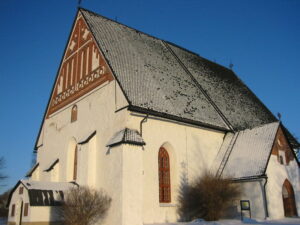
Die Gemeinsame Feststellung von Porvoo: Eine Transformation der besonderen Art (3/3)
Der dritte Teil des Blogbeitrags von Vera M. Waschbüsch diskutiert die PGF als mögliche Antwort auf aktuelle ökumenische Herausforderungen. Dabei wird besonders das Verständnis des Bischofsamts und der historischen Sukzession zwischen anglikanischen und lutherischen Kirchen analysiert, das sowohl theologische als auch politische Dimensionen hat. Trotz der erreichten Kirchengemeinschaft bleibt die in Joh 17,21f formulierte Einheit ein fernes Ziel, da grundlegende Unterschiede im Amts- und Kirchenverständnis weiterhin bestehen.
)
Die Gemeinsame Feststellung von Porvoo: Eine Transformation der besonderen Art (2/3)
Der zweite Teil des Blogbeitrags von Vera M. Waschbüsch untersucht die Rezeption der Porvoo-Gemeinsamen Feststellung im deutschsprachigen Raum. Er zeigt, dass die PGF dort kaum Beachtung findet, was unter anderem an theologischen Differenzen, insbesondere zur Frauenordination und dem Bischofsamt, liegt. Zudem wird deutlich, dass auch ökumenische Institute nur vereinzelt zur PGF Stellung nehmen, was die Wahrnehmung und Relevanz der Erklärung weiter einschränkt.
)
Die Gemeinsame Feststellung von Porvoo: Eine Transformation der besonderen Art (1/3)
Vera M. Waschbüsch untersucht in diesem ersten Teil ihres dreiteiligen Blogbeitrags die Porvoo-Gemeinsame-Feststellung (PGF) im ökumenischen Kontext und ihre Bedeutung für den europäischen Protestantismus. Sie beleuchtet die historischen und theologischen Hintergründe dieses Zusammenschlusses zwischen lutherischen und anglikanischen Kirchen in Nordeuropa und diskutiert dessen ökumenische Reichweite. Dabei werden sowohl bestehende Herausforderungen als auch die kulturhistorischen Bedingungen analysiert, die diesen kirchlichen Annäherungsprozess ermöglicht haben.
)