
On New Ways of Thinking about the Church (Part II)
Most Christians have a general idea of how the church developed. The New Testament provides the main entrée into that process, but it does not paint an exact picture of how the church took form in response to the preaching of Jesus and his execution… Part II of „On New Ways of Thinking about the Church“ by Roger Haight SJ , introduced by Andreas Telser.
)

Spuren jüdischen Lebens in Anatolien: Antakya und Gaziantep
Antakya und Gaziantep waren über Jahrhunderte Orte religiöser Vielfalt – ein Alltag, der lange selbstverständlich war. Heute erzählen Synagogen und Friedhöfe von einem fast verschwundenen jüdischen Leben und davon, warum das Erinnern daran für unsere Gegenwart wichtig bleibt. Hier lebten Muslim*innen, Christ*innen und Jud*innen oft Tür an Tür. Städte wie Gaziantep waren eng mit Aleppo verbunden – über Handel, Familienbeziehungen und gemeinsame Nachbarschaften. Ein Beitrag von Aysun Yaşar.

On New Ways of Thinking about the Church (Part I)
For a growing number of Christians, mainly in the Western hemisphere, church-talk has become problematic for many reasons. However, for theology to shy away from or even avoid questions of the church only further limits the credibility of theology. Throughout his œuvre, Roger Haight has consistently tackled challenging issues for contemporary publics. With an introduction by Andreas Telser
)
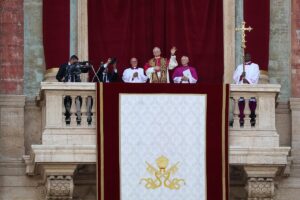
A New Pope, A New Dawn
Personal reflections on the papacy, an American pontiff, and hope that faith and leadership may yet shape our fractured world.
By Willemien Otten, Professor at the University of Chicago Divinity School. With an Introduction by Andreas Telser.


The Small Stone in the Shoe. When Obsession Meets Grace: The Ambiguities of Scrupulosity – A Review of „Can Scrupulosity Be Spiritually Innocent?“
In her article, Veronika Hübner reflects on a recent lecture by Tasia Scrutton at the European Academy of Religion, exploring the ambiguities of Scrupulosity—a religiously infused obsessive-compulsive condition that can deeply disrupt faith while occasionally fostering spiritual depth.


Between Apocalypse and New Life. The 78th Festival de Cannes: 13th – 24th May 2025
In this contribution, Milja Radovic reflects on the festival’s highlights, the role of the Ecumenical Jury and her own experience as a jury member. The articles explore some of the most interesting movies from the festival, offering thoughtful reviews and insights from the author’s perspective.


Wenn Bildung nur noch einen Marktwert behält. Die marktwirtschaftliche Ausrichtung von katholischen Hochschulen in den USA und die weitreichende Gefahr eines Ausverkaufs von katholischer Bildungstradition
Zum Problem werden Werte, wenn sie sich nicht mehr an den zugrundeliegenden Erfahrungen orientieren, sondern der kapitalistische Markt zum entscheidenden Faktor wird und darüber bestimmt, ob diese Werte von Relevanz sind und wie ihr Marktwert ausfällt. Diesem Problem geht Massimo Faggioli in seinem neuesten Buch – „Theology and Catholic Higher Education. Beyond Our Identity Crisis, Maryknoll 2024“ – nach, in dem er den gegenwärtigen Status der katholischen Bildungstradition in den USA untersucht. Eine Analyse von Florian Klug.

Der nächste Papst
Mit dem Tod von Papst Franziskus haben die Spekulationen über mögliche Nachfolger in den internationalen und nationalen Medien begonnen. Versucht man sich in Prognosen über potenzielle Nachfolgekandidaten des verstorbenen Papstes liegt die Aufgabe erstens darin, auf die Situation der Katholischen Kirche und die daraus sich ergebenden Diskurse über den Weg, den die Kardinäle beschreiten wollen, zu achten. Eine Analyse von Kurt Appel


Und jetzt? Der neue Papst vor dem Großinquisitor
„Die Wahl wird zwischen Betäubung und Prophezeiung liegen. Der göttliche Name, von dem uns die Zehn Worte gebieten, ihn nicht vergeblich zu benutzen, ist in den Mund der großen Verderbten zurückgekehrt….“ Ein kritischer Kommentar von Sergio Massironi. anlässlich der bevorstehenden Wahl des neuen Papstes.


The Year of Living Dangerously – In the land of raspberries and students –
Amid deepening political crises and societal fragmentation, the student uprisings in Serbia signal a resurgence of community and political engagement, challenging both local and global forces. In this contribution, Milja Radovic explores the theological dimensions of this movement, emphasizing that „being is communion“ and that transformation occurs through faith in action and ascetic praxis. Christian thought, she argues, can offer an antidote to apathy and isolation, fostering a communal life.
